If you’ve ever dreamed of walking into a living history book, Orchha Fort in Madhya Pradesh is exactly that. Nestled along the serene Betwa River, this 16th-century fort complex isn’t just about walls and palaces—it’s about stories, legends, and a charm you won’t find in crowded tourist hubs like Agra or Jaipur. Having lived in Orchha for decades, I can tell you that Orchha Fort isn’t just a monument; it’s the heartbeat of our town.
Quick Facts about Orchha Fort
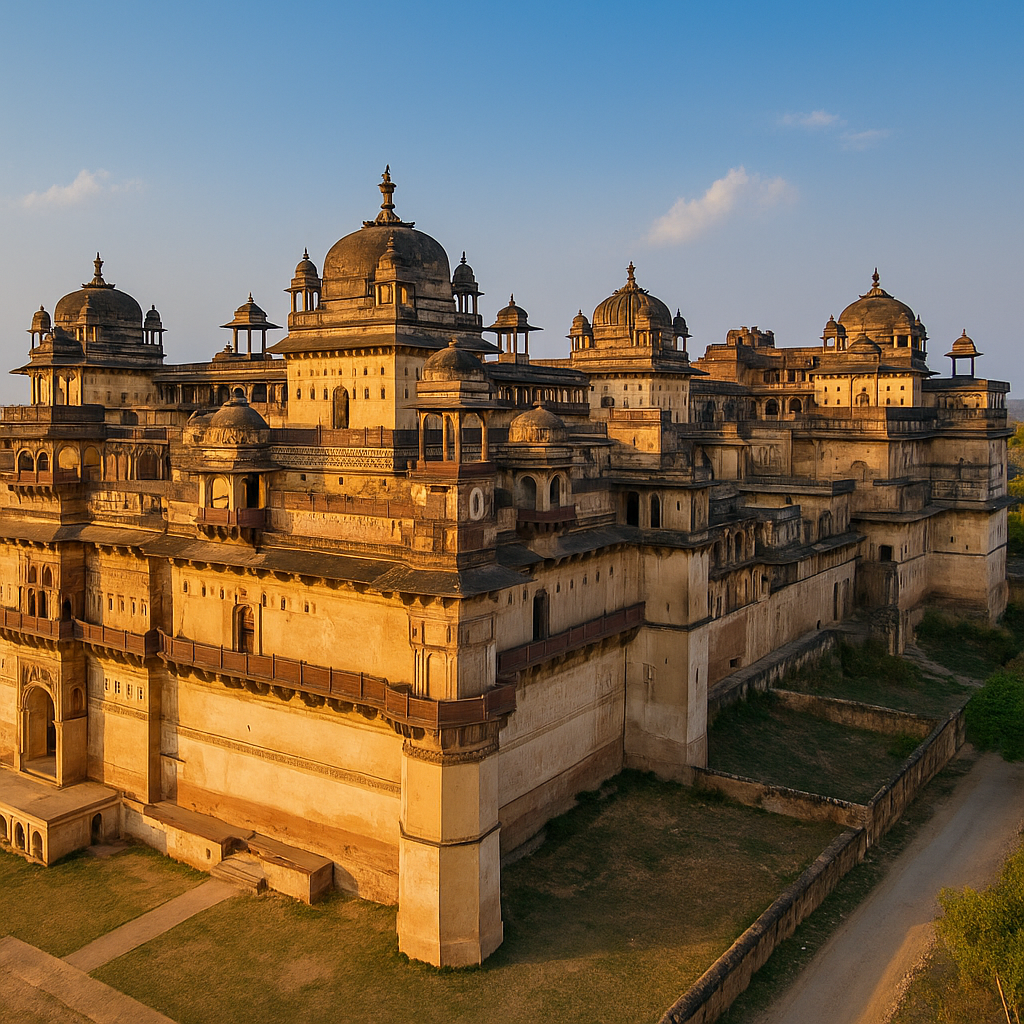
- Address: Ticket counter, Fort Complex, Orchha, Madhya Pradesh 472246
- Coordinates: 25°21′N 78°38′E / 25.35°N 78.64°E
- Built: 16th–17th centuries by Bundela Rajputs
- Founded: 1501 AD by King Rudra Pratap Singh
- Condition: Abandoned as a residence since 1783, but preserved as heritage
- Hours: 9:00 AM – 6:00 PM (Fort complex), Light & Sound Show after hours
- Phone: 0755 278 0600
- Entry Fee: ₹10 (Indians), ₹250 (Foreigners), extra for cameras
- Best Views: Betwa River, sunset over cenotaphs, Orchha temples from Jahangir Mahal
History of Orchha Fort
Origins of the Fort
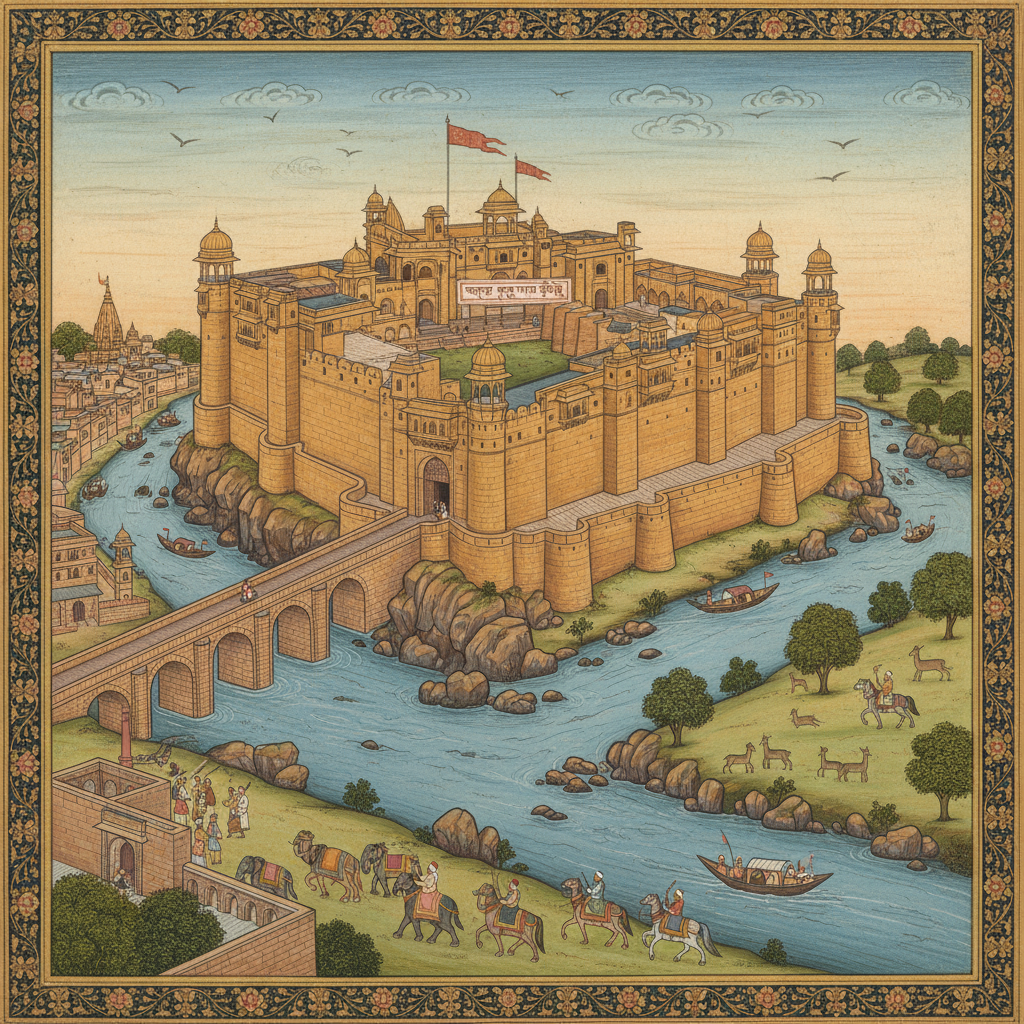
The Orchha State was founded in 1501 AD by Rudra Pratap Singh, a Bundela Rajput ruler. Strategically placed on an island formed by the Betwa and Jamni rivers, the fort was both a royal residence and a defensive stronghold.
Bundela Dynasty & Mughals
The Bundelas were known for their bravery but also for their complicated ties with the Mughal emperors. Vir Singh Deo (1605–1627) famously built Jahangir Mahal to honor Emperor Jahangir, who visited Orchha for one night!
Later Years
The British period saw Orchha lose political relevance, but the charm of its palaces, temples, and frescoes remained. Even Lutyens’ Delhi architecture was partly inspired by Orchha’s domes and “pepper pot” towers.
Architecture & Layout of Orchha Fort
The fort complex is like a city within walls—palaces, temples, gardens, pavilions, and cenotaphs all rolled into one. Entering through the arched causeway over the Betwa feels like stepping back 400 years.
Raja Mahal (King’s Palace)
- Built in the early 16th century
- Exterior: simple and sturdy
- Interior: richly painted murals of gods, mythical animals, and royal life
- Special feature: clever window placement that changes light and shadow moods through the day
- Secret passages for royal safety
Ram Raja Temple (Unique Legend)
- Originally part of Raja Mahal
- Story: Rani Ganeshkuwari brought Lord Rama’s idol from Ayodhya, kept it in the palace temporarily… but once placed, it wouldn’t move!
- Result: Rama remained in the palace, worshipped as a King (the only place in India where this happens)
- Guard of honor: Every day, Rama is saluted like a ruler
Jahangir Mahal
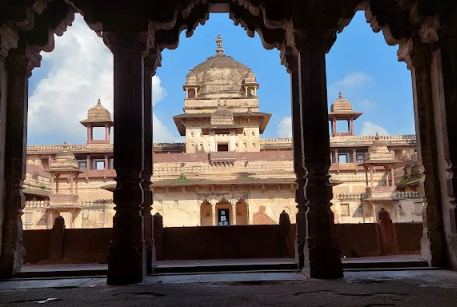
- Built in 1605 by Vir Singh Deo
- Indo-Islamic blend: domes, latticed windows, and elephant gateways
- Four-level symmetrical square palace
- Best view: climb to the rooftop for panoramic views of Orchha temples and Betwa River
- Fun fact: Jahangir only stayed here one night, but the palace became a masterpiece
Sheesh Mahal
- Built for King Udait Singh
- Glasswork interiors
- Now a heritage hotel (imagine staying inside the fort!)
Rai Praveen Mahal
- Dedicated to the poetess and courtesan Rai Praveen, beloved of Raja Indrajit
- Frescoes include her portrait in revealing attire
- Famous story: She charmed Emperor Akbar with her wit and poetry, earning her release back to Orchha
Phool Bagh (Garden Complex)
- Mughal-style gardens with octagonal flower beds
- Water fountains leading to an 8-pillared pavilion
- Underground cooling retreat with Chandan Katora system that created “indoor rain”
Temples Inside & Around the Complex
Chaturbhuj Temple
- Originally meant for Lord Rama’s idol
- Stands empty now because the idol stayed in Raja Mahal
- Offers the best panoramic view of Orchha town
Laxminarayan Temple
- A hybrid of fort and temple
- Stunning frescoes depicting Ramayana, Mahabharata, and even British soldiers
Scenic Beauty & Views
- Sunset over Betwa River from fort walls
- Dawn light on Jahangir Mahal domes
- View of cenotaphs (chhatris) from the fort rooftop
Light & Sound Show at Orchha Fort
When the sun sets, the fort comes alive with lights and stories.
- Summer Timings:
- English: 7:45 PM – 8:30 PM
- Hindi: 8:45 PM – 9:45 PM
- Winter Timings:
- English: 6:30 PM – 7:30 PM
- Hindi: 7:45 PM – 8:30 PM
This 45-minute show narrates the tales of Bundela kings, their wars, and their devotion. Sitting in the open courtyard under the stars—trust me—it’s magical.
Best Time to Visit Orchha Fort
- Winter (Nov–Feb): Pleasant, best for exploring
- Summer (Mar–Jun): Hot, but fewer crowds
- Monsoon (Jul–Sep): Green landscapes, slippery steps
How to Reach Orchha Fort
- By Road: 16 km from Jhansi, 80 km from Tikamgarh
- By Train: Nearest station – Jhansi Junction (well connected to Delhi, Agra, Bhopal)
- By Air: Gwalior (120 km) & Khajuraho (180 km) airports nearby
Things to Do Inside Orchha Fort Complex
- Wander through secret passages
- Climb rooftops for temple views
- Photography at Jahangir Mahal’s balconies
- Attend evening aarti at Ram Raja Temple
- Stroll by Betwa river ghats
Nearby Attractions
- Chhatris (Cenotaphs): Royal tombs by the river
- Orchha Wildlife Sanctuary: Great for birdwatching
- Orchha Market: Handicrafts, souvenirs, and local snacks
Where to Stay Near Orchha Fort
- Inside the Fort: Sheesh Mahal Hotel (heritage stay)
- Budget: Homestays and guesthouses near Ram Raja Temple
- Luxury: Betwa Retreat by MP Tourism, resorts by the river
Local Food to Try
- Orchha Kachoris (spicy, crispy delight)
- Bundelkhandi Thali (local flavors in one plate)
- Sweets near Ram Raja Temple (don’t miss peda!)
Reviews from Travelers
- “Walking through its massive gates feels like stepping back in time.” – Sandeep Kumar
- “Worth the visit, the Jahangir palace in general. Great craftsmanship.” – Suddhasatya Samanta
- “A tranquil and deeply enriching experience.” – Avinash Kumar Gour
FAQs about Orchha Fort
1. What is Orchha Fort famous for?
Its Bundela architecture, palaces like Jahangir Mahal, and the Ram Raja Temple where Lord Rama is worshipped as a King.
2. What are Orchha Fort timings?
9:00 AM – 6:00 PM daily. Light & Sound show runs in the evening.
3. How much is the entry fee?
₹10 (Indians), ₹250 (Foreigners). Camera charges extra.
4. Do I need a guide to explore Orchha Fort?
Not compulsory, but guides add storytelling charm.
5. How long does it take to explore the fort complex?
At least 3–4 hours if you want to see palaces, temples, and gardens properly.
Final Thoughts
Orchha Fort is not just a monument—it’s a time capsule. From the murals of Raja Mahal to the moonlit glow of Jahangir Mahal, and from local legends of Rama to the tranquility of Betwa River, this fort speaks to the soul.
So, when you visit, don’t rush. Walk slowly, let the walls whisper their stories, and maybe stay back for the light and sound show. You’ll leave with memories carved deeper than stone.