Welcome to Orchha, my hometown for decades, and let me tell you about the pride of our land — Ram Raja Temple. This is no ordinary temple. It is the only place in India where Lord Ram is worshipped as a King (Raja) and treated with the same honor as a ruling monarch. Every day, the temple echoes with devotion, police salutes, aartis, and local stories that make the atmosphere unlike anywhere else in the world.
Whether you’re a pilgrim, a traveler, or just curious about the history, I’ll guide you through the legend, rituals, timings, local beliefs, and insider tips so you can truly feel the magic of Raja Ram.
The roots of this temple go back to the 16th century, during the rule of King Madhukar Shah Ju Dev (1554–1592) of Orchha. He was a great devotee of Banke Bihari (Lord Krishna), while his queen, Ganesh Kunwari (Kamla Devi), was deeply devoted to Lord Ram.
One evening, both went to a Krishna temple in Vrindavan, but it was closed. Instead of leaving, they joined devotees outside, singing and dancing in praise of Krishna. Local lore says Krishna and Radha themselves appeared and danced with them, and golden flowers rained from the sky.
2.2. The Queen’s Vow and Journey to Ayodhya
After the incident, the king insisted the queen should join him to Mathura, but she wished to go to Ayodhya. Irritated, the king mocked her devotion, saying:
“You keep worshipping Ram, but he never appears like Krishna did. If you insist on going to Ayodhya, return only if you bring child Ram with you.”
The queen accepted the challenge. She vowed to bring child form of Lord Ram to Orchha, or else end her life in the Sarayu river.
She left on foot, fasting and praying near the Sarayu. She gave up food, lived only on fruits, then leaves, and finally nothing. After a month of austerity, when she was about to drown herself in despair, miraculously child Ram appeared in her lap.
2.3. The Three Conditions of Lord Ram
Child Ram agreed to come with the queen but on three conditions:
He would travel only in Pukh Nakshatra. (So the journey from Ayodhya to Orchha took 8 months and 27 days).
Once in Orchha, he would be the King of Orchha, not her husband.
The first place he is seated would be his permanent home.
The queen agreed and carried Lord Ram in her lap all the way to Orchha.
2.4. The Palace Becomes the Temple
When she returned, she intended to place Ram in the newly built Chaturbhuj Temple. But first, she rested with him in her palace (Ranivaas). By Ram’s condition, the first place where he was seated became his eternal abode.
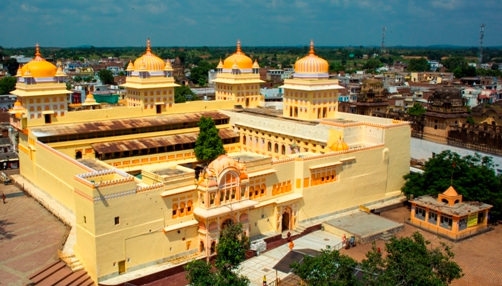
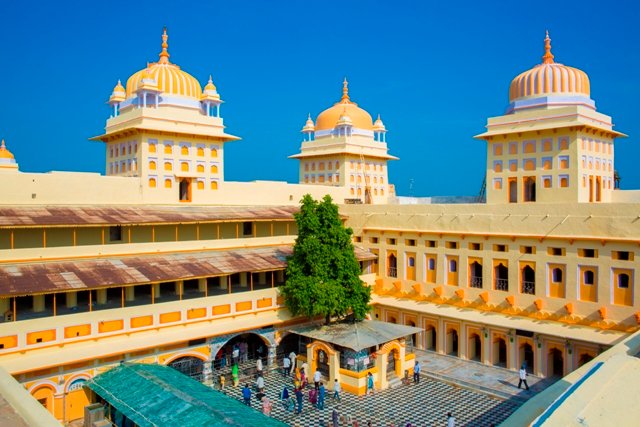
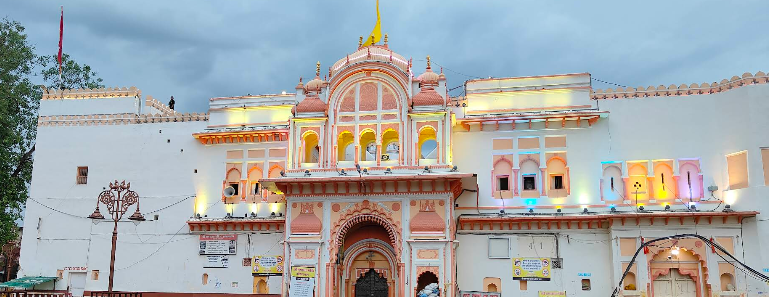
Thus, the queen’s palace transformed into today’s Ram Raja Temple. Unlike other temples, this is not built traditionally as a shrine — it’s actually a palace-turned-temple.
3. Unique Significance of Ram Raja Temple
Only Temple in India where Lord Ram is treated as a King.
Daily Guard of Honor — police salute Lord Ram like a ruling monarch.
Royal protocols: Lord Ram is offered rajbhog, new clothes (poshak), and weapons.
Locals consider themselves subjects of Raja Ram, not just devotees.
4. Architecture & Layout of the Temple
The Ram Raja Temple is unique because it blends palatial architecture with temple traditions.
Dome & Courtyard: The structure still resembles the queen’s palace.
Sanctum: Lord Ram sits in Padmasan posture, with left toe exposed — believed to fulfill wishes if seen.
Other Shrines: Hanuman ji, Durga maa, and other deities inside.
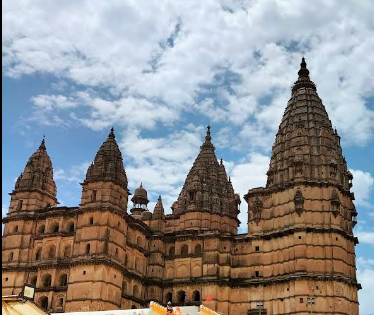
Chaturbhuj Temple nearby: originally built for Ram, now dedicated to Radha-Krishna.
5. Rituals, Aarti & Daily Schedule
The temple follows rituals like a royal court. Each day:
Mangala Aarti (Morning): 8:00 am (Feb–Oct), 9:00 am (Oct–Feb)
Because it is the only temple in India where Ram is worshipped as a King with police salute and royal honor.
Q2. Can non-Hindus visit?
Yes, all visitors are welcome.
Q3. Are there entry fees?
No, entry is free.
Q4. What is the best time to visit?
During monsoon and winter, especially during festivals like Ram Navami and Diwali.
Q5. Is Orchha well connected?
Yes, via Jhansi (train/bus), Gwalior (airport), and Delhi (international flights).
14. Conclusion
For us Orchha locals, Raja Ram is not just a deity — he is our ruler, protector, and guardian. Every morning, police salute him like a true king, and every devotee bows with love.
When you visit Orchha, don’t just see Ram Raja Temple as a tourist spot. Come as a guest in the royal court of Raja Ram, experience the chants, witness the police guard, and feel the divine aura that has blessed our town for centuries.
✨ If Orchha is the heart of Bundelkhand, then Ram Raja Temple is its soul.